

Reverse logistics platform: how to choose the right solution for your business

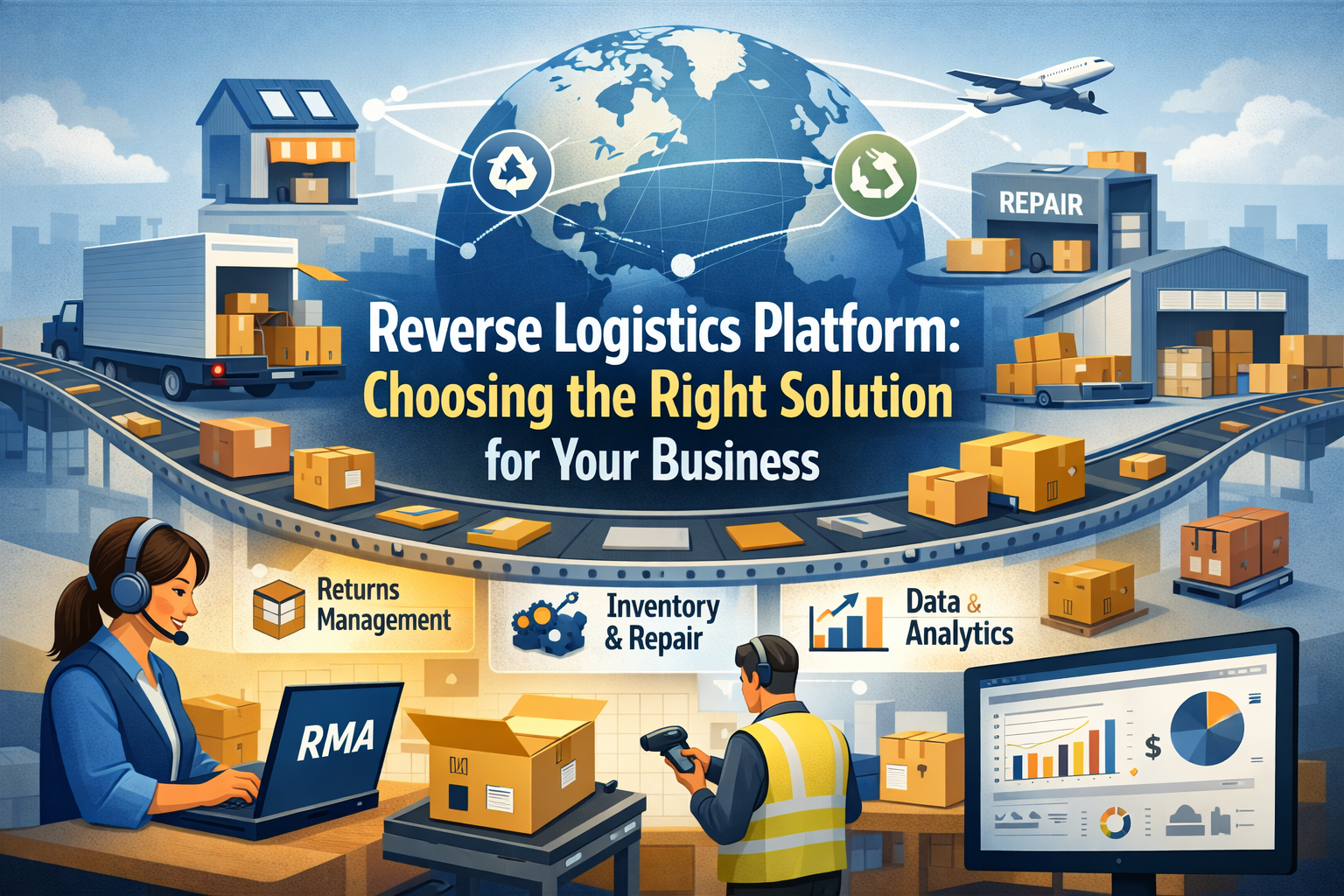
Reverse logistics platform: how to choose the right solution for your business
In an era where e-commerce return rates frequently exceed 20% and B2B after-sales complexity is skyrocketing, managing reverse flows manually is no longer sustainable. A dedicated reverse logistics platform has evolved from a "nice-to-have" tool into a critical infrastructure requirement for operational resilience. By digitizing the journey of returned goods, from the initial customer request to final disposition, businesses can transform a traditional cost center into a source of competitive advantage. This guide explores the technical criteria, core functionalities, and strategic considerations necessary to select the right solution for your specific business needs.
The imperative of a reverse logistics platform
The modern supply chain is circular, yet many organizations still treat returns as a linear, disconnected afterthought. As return volumes grow, projected to exceed $600 billion in value annually in the US alone, the operational friction caused by manual handling creates a bottleneck that erodes margins. Implementing a specialized reverse logistics platform is the only viable method to regain control over these complex flows.
Defining a reverse logistics platform
A reverse logistics platform is a specialized software ecosystem designed to orchestrate the backward flow of goods from the end customer to the merchant or manufacturer. Unlike a standard Warehouse Management System (WMS) which focuses on outbound efficiency, this software specializes in the nuances of "un-selling" products. It manages the entire lifecycle of a return, including RMA (Return Merchandise Authorization) generation, carrier selection, physical receipt, grading, repair management, and final disposition (restocking, recycling, or liquidation).
Technically, these platforms function as a centralized operating system that connects disparate stakeholders, including consumers, customer support teams, 3PLs, repair centers, and carriers, via API integrations. The goal is to create a digital twin of the physical return, providing traceability at every touchpoint.
Why businesses need a dedicated platform
Relying on spreadsheets or fragmented ERP modules to manage returns often leads to data silos and operational blindness. A generalist ERP lacks the specific workflows required for complex after-sales scenarios, such as managing warranties, coordinating third-party repairs, or handling cross-border regulatory compliance for defective electronics.
Businesses require a dedicated solution to bridge these gaps. Revers.io unifies fragmented after-sales processes into one connected operating system, eliminating the friction between different departments and external partners. By centralizing data, you can automate decision-making logic, such as instantly approving a refund for a low-value item or routing a high-value electronic device to a specific repair center, thereby reducing manual touchpoints by up to 50%.
The impact on customer satisfaction and brand reputation
The returns experience is a decisive factor in customer retention. Industry data suggests that over 80% of consumers review a return policy before making a purchase, and 92% will buy again if the return process is easy. A reverse logistics platform directly impacts these metrics by providing transparency and speed.
When a platform automates the returns process, customers receive instant updates on their return status, tracking numbers, and refund timelines. This reduces "Where is my refund?" (WISMR) support tickets, which can account for 30-40% of customer service volume. A smooth, branded returns portal reinforces trust. Conversely, a clumsy, manual process involving printed PDFs and long email delays can permanently damage brand reputation and lower Net Promoter Scores (NPS).
Core functionalities of a modern reverse logistics platform
To effectively manage the complexity of modern supply chains, a reverse logistics platform must offer more than just a shipping label generator. It requires a suite of advanced features capable of handling multi-channel flows and complex disposition logic.
Streamlined returns management
The cornerstone of any effective platform is a self-service returns portal that empowers the customer while enforcing business rules. This interface must allow users to select items, choose return reasons, and generate shipping labels or QR codes without human intervention.
Behind the scenes, the software must validate requests against policy rules (e.g., return windows, non-returnable items) in real-time. Advanced platforms support diverse return methods, including drop-off points, home pickups, and locker integrations. By automating the initial authorization and logistics booking, companies can reduce the administrative time per return from 10-15 minutes to under 30 seconds.
Intelligent inventory disposition
Once an item arrives at a warehouse, the platform must guide the physical handling process. Intelligent inventory disposition involves dynamic routing rules based on the item's condition, value, and demand.
This automated logic turns assets over quickly, maximizing recovery value and preventing inventory from depreciating in a "quarantine" pile.
Data analytics and reporting for informed decision-making
Data is the most valuable byproduct of the returns process. A robust platform must capture granular data points: return reasons by SKU, carrier performance, repair turnaround times, and refund speeds. Revers.io provides comprehensive dashboarding for 360° visibility across after-sales processes, allowing operations managers to identify trends instantly.
For example, if a specific shoe style has a 40% return rate due to "sizing issues," the analytics module should flag this anomaly. This insight allows product teams to adjust sizing charts or manufacturing specifications, addressing the root cause of returns rather than just managing the symptom.
Seamless integration with existing supply chain systems
A reverse logistics platform cannot operate in a vacuum. It must integrate with your existing tech stack to maintain data consistency. This involves bi-directional synchronization with:
- ERPs (SAP, NetSuite, Microsoft Dynamics): To validate orders and trigger financial transactions (refunds/credits).
- eCommerce Platforms (Shopify, Magento, Salesforce): To pull customer and order data.
- WMS: To alert warehouses of incoming shipments and update stock levels upon receipt.
- Carriers: To generate labels and pull tracking events via API.
The standard for integration today is RESTful APIs and pre-built connectors that allow for rapid deployment without extensive custom coding. Real-time data exchange means customer support, finance, and logistics teams are all viewing the same "single source of truth."
Strategic considerations for choosing your platform
Selecting a reverse logistics platform is a strategic investment that impacts financial performance and operational agility. Decision-makers must evaluate solutions not just on current feature sets, but on their ability to support long-term business objectives.
Aligning with your business model and industry specifics
Different industries have vastly different requirements for reverse logistics. A fashion retailer requires a system optimized for speed, getting apparel cleaned, folded, and back online to avoid seasonal obsolescence. In contrast, a consumer electronics manufacturer needs deep functionality regarding serial number tracking, warranty validation, repair workflows, and spare parts management.
When evaluating platforms, verify that the solution supports your specific business model (B2B, B2C, or D2C). For B2B operations, the platform must handle bulk returns, complex credit memo reconciliations, and multi-tier approval workflows. Look for vendors with proven use cases in your specific vertical to avoid costly customization requirements later.
Scalability and flexibility for future growth
Your chosen platform must be able to handle peak volumes without performance degradation. For retailers, this means the system must remain stable during the post-holiday "returns tsunami" in January, where volumes can spike by 300-400%.
Scalability also refers to geographical expansion. If you plan to enter new markets, the platform must support:
- Multi-currency and multi-language interfaces.
- Cross-border logistics and customs documentation generation.
- Integration with local carriers in target regions.
- Compliance with local consumer protection laws (e.g., EU Right of Withdrawal).
Evaluating vendor reputation, support, and implementation expertise
The technical capability of the software is only half the equation; the partner behind it matters equally. Assess the vendor's Service Level Agreements (SLAs), specifically looking for uptime guarantees of 99.9% or higher.
Investigate their support structure. Do they offer 24/7 support for critical issues? What is their average response time? Furthermore, examine their implementation methodology. Experienced vendors should provide a dedicated customer success manager and a clear onboarding roadmap. Request references from current clients with similar transaction volumes to gauge the vendor's reliability and responsiveness to feature requests.
Understanding total cost of ownership and potential ROI
The cost of a reverse logistics platform extends beyond the monthly SaaS subscription. You must calculate the Total Cost of Ownership (TCO), which includes implementation fees, training costs, and potential transaction fees.
However, this cost should be weighed against the Return on Investment (ROI). Revers.io delivers immediate ROI through automation and streamlined operations, often recovering the investment cost within the first year. Financial benefits come from:
- Labor reduction: Automating manual data entry and customer support inquiries.
- Asset recovery: Increasing the percentage of returned goods that are resold at full price.
- Logistics savings: Optimizing carrier selection and consolidating shipments.
- Fraud prevention: Automatically flagging suspicious return patterns.
Prioritizing sustainability and compliance features
Sustainability is increasingly becoming a regulatory requirement rather than just a corporate value. In Europe, regulations like the Digital Product Passport and the Waste Electrical and Electronic Equipment (WEEE) Directive mandate strict tracking of product lifecycles.
Your platform should facilitate circular economy initiatives by tracking the carbon footprint of return shipments and providing data for ESG reporting. Features that support "green returns," such as consolidating shipments, paperless labeling, or routing items to local repair centers to minimize mileage, are essential for modern compliance and brand image.
Implementing and optimizing your reverse logistics platform
Successful deployment requires a structured approach that goes beyond technical installation. It involves re-engineering processes and aligning stakeholders across the organization.
Developing a phased implementation strategy
Attempting a "big bang" launch across all territories and channels simultaneously often leads to disruption. A phased approach is recommended to mitigate risk.
- Pilot Phase (Weeks 1-4): Launch the platform for a single country or a specific product line. This allows you to test integrations, validate workflows, and gather initial user feedback in a controlled environment.
- Refinement (Weeks 5-6): Adjust business rules and interface configurations based on pilot data.
- Regional Rollout (Weeks 7-12): Expand to core markets, integrating additional carriers and 3PL partners.
- Global Deployment: Roll out to all remaining territories once the core system is stable and proven.
Training and change management for successful adoption
The best software fails if teams do not use it correctly. Training programs must be tailored to different user roles. Warehouse staff need hands-on training with scanning hardware and disposition interfaces, while customer support agents require training on the admin portal and policy overrides.
Change management is critical here. Shift the internal narrative from "learning a new tool" to "eliminating manual headaches." Identify internal champions within the logistics and support teams who can advocate for the platform and assist colleagues during the transition.
Continuous monitoring and performance optimization
Go-live is not the finish line; it is the starting point for optimization. You must establish a routine of reviewing key performance indicators (KPIs) such as Average Handling Time, Refund Turnaround Time, and Net Recovery Value.
Revers.io's real-time connectivity enables continuous optimization across the stakeholder network. By constantly analyzing the flow of data between consumers, carriers, and repair centers, the platform helps identify bottlenecks, such as a specific repair partner consistently missing SLAs or a carrier with high damage rates. This visibility allows for agile adjustments, keeping the reverse supply chain efficient and cost-effective as business conditions change.
Conclusion: Empowering your business with the right platform
Choosing a reverse logistics platform is a foundational decision for modern commerce. It transforms the returns process from a chaotic drain on resources into a structured, data-driven operation that builds customer loyalty and recovers value. By prioritizing connectivity, automation, and analytics, you can build a resilient after-sales ecosystem. The right solution does not just manage returns; it optimizes the entire lifecycle of your products, making your operations scalable, sustainable, and profitable in the long term.
Frequently asked questions
What is reverse logistics?
Reverse logistics refers to the supply chain process of moving goods from their typical final destination (the customer) back to the manufacturer or retailer for the purpose of capturing value or proper disposal. It encompasses returns, repairs, refurbishment, recycling, and waste management.
What are examples of reverse logistics?
Common examples include a customer returning a clothing item for a size exchange, a manufacturer recalling defective electronics for repair, leasing companies taking back equipment at the end of a contract, and the recycling of packaging materials or end-of-life products.
How does a reverse logistics platform improve operational efficiency?
A reverse logistics platform improves efficiency by automating manual tasks like RMA creation and label generation, centralizing data to eliminate silos, and optimizing routing logic so returned items are processed and resold or recycled as quickly as possible.
Discover other articles

Revers.io simplifies the after-sales service experience for both merchants and customers
Who are Revers.io? Combining human expertise with cutting-edge technology, our SaaS platform Revers.io is the first plug-and-play returns management solution for retailers.

After-sales and returns: what regulations in Europe?
So, you’ve translated your product catalogue, opened up a new online shop, got to grips with VAT figures, and finally found somebody to deliver your goods: your business is ready to go international. But have you thought about...

The Role of Returns in e-Commerce
The convenience of being able to return a product easily has revolutionised online shopping with customers now able to shop for a multitude of items which previously would only have been possible in stores.
Tailored to your needs: discover our platform at work
Our team is ready to bring your project to life - let’s talk!
Get a demo